
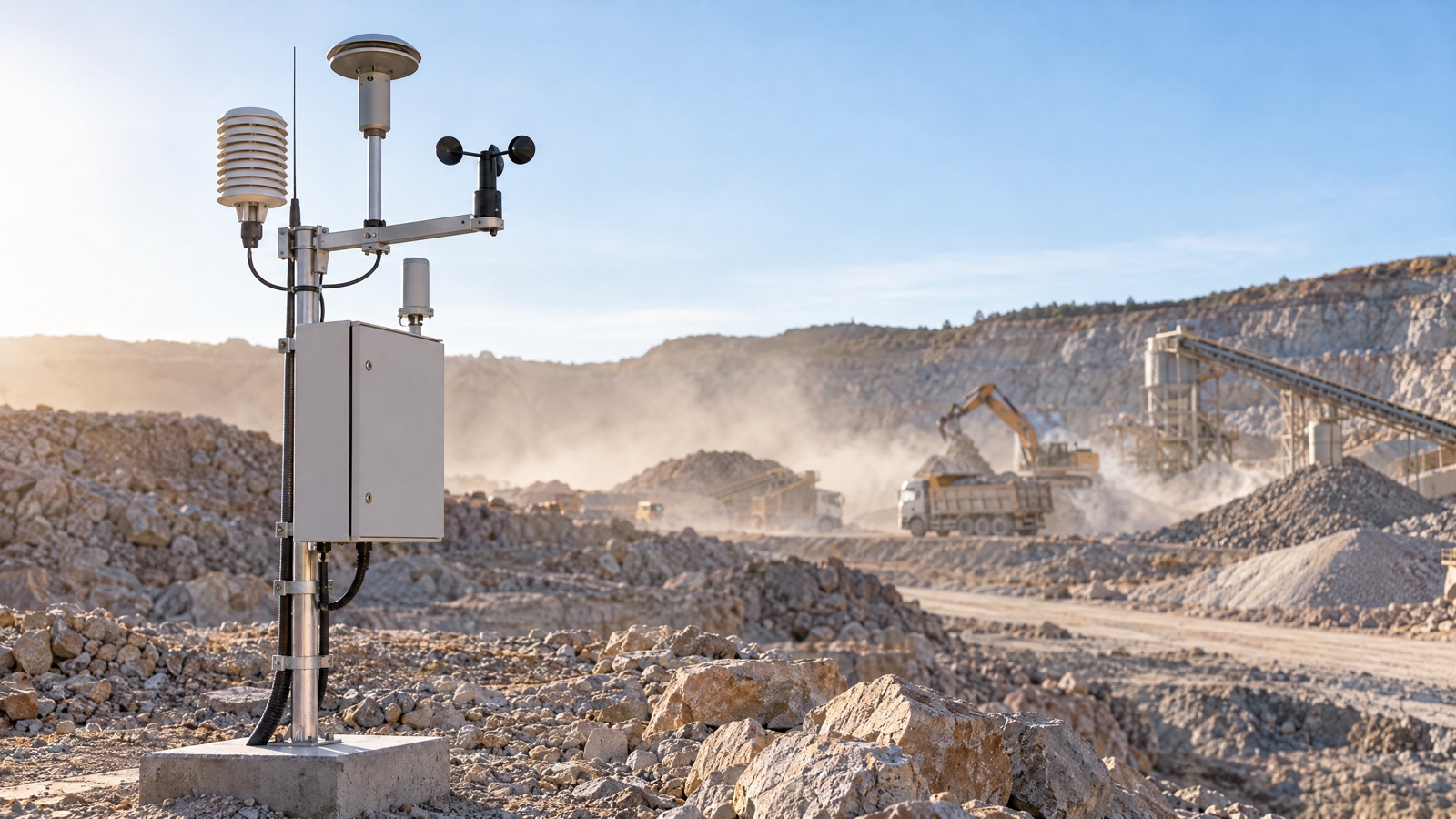
EnviroSaudi supplies and configures dust and particulate monitoring systems in Saudi Arabia for construction, mining, quarrying, cement, manufacturing, ports, logistics, waste operations and urban projects. We select equipment around the particle fraction, expected concentration, source activity, monitoring location and required response. The scope can cover a single real-time monitor or a connected network with weather sensors, remote data, alarms and maintenance planning.
You receive a written proposal setting out the configuration, scope, lead time and price. Send the site layout, activity schedule, target PM fractions, project specification and reporting needs to EnviroSaudi or Request a quotation.
Select PM fractions and data use first
PM1, PM2.5, PM10 and total suspended particulate describe different particle-size groupings. A construction or quarry boundary may prioritise coarser dust and PM10, while combustion and urban applications may add PM2.5. Some projects need TSP or particle counts. The required fraction, averaging period and action threshold should be fixed before the instrument is selected.
The measurement purpose also changes the system. Operational dust control may need short-interval trends and alerts during excavation, crushing, stockpile movement or loading. A site-wide network may need several perimeter locations and wind data. A project requiring a formal approved method may need a different instrument class or a co-located reference measurement. EnviroSaudi provides equipment and live-data integration. Equipment supply does not replace the permit, approved method or regulatory decision that applies to your project, and impact assessment and dispersion modelling are separate services.
Real-time optical monitoring and its limits
Many real-time particle instruments use light scattering. The Aeroqual Dust Sentry manufacturer page explains that its PCX module uses scattered light to size and count particles, then converts particle counts into mass measurements with an algorithm. It lists simultaneous PM1, PM2.5, PM4, PM10 and TSP measurement, while another configuration uses a nephelometer and cyclone for a selected fraction. The page also describes a heated inlet intended to reduce humidity effects.
This operating principle matters: an optical instrument infers particulate mass from how particles scatter light and from conversion assumptions. Particle composition, size distribution and moisture can affect the relationship between signal and mass. For a project that needs comparability with another method, the plan should define collocation, site adjustment or parallel sampling rather than assuming automatic equivalence. The US EPA Air Sensor Toolbox provides official resources on sensor performance, study design, collocation and data interpretation and distinguishes commonly used sensors from regulatory-grade monitors.
The measurement plan should record the selected fraction, sample interval, reporting average, alert logic and comparison method. It should also say how invalid data, inlet blockage, instrument downtime and maintenance periods will be identified. These controls help a buyer distinguish an operational trend network from a project that requires a formally recognised measurement route.
[Image placeholder]
Dust and particulate monitoring systems we supply: equipment, weather and remote reporting
The Scentroid CTmini manufacturer page lists PM1, PM2.5, PM4 and PM10 with temperature, relative humidity and pressure. Its published specification states 10-second sampling, wall, pole or tripod mounting, 16 GB storage, standard Wi-Fi, optional LTE Cat.M/NB-IoT communication and SIMS3 data logging, analysis, alarms and remote management. Manufacturer-listed accuracy is ±(5 µg/m³ or 10%) for PM2.5 and ±(10 µg/m³ or 10%) for PM10. These figures apply to the manufacturer’s stated product specification; the project still needs to review range, aerosol, environmental conditions, required method and maintenance.
For comparison, Aeroqual describes Dust Sentry configurations for real-time particle fractions, weatherproof deployment, remote data and environmental-sensor integration. EnviroSaudi evaluates a compact PM node, a dedicated dust station or a mixed network without representing every model as equivalent. Buyers can review the dedicated Scentroid CTmini particulate monitor route when a compact PM-focused configuration is relevant. Configuration, availability and lead time are confirmed in each quotation.
Wind speed and direction can help relate dust peaks to an active area, boundary or receptor, while rainfall and humidity provide further context. Weather correlation does not prove one source caused a reading, but it helps operators review events alongside work logs. The dashboard brief can include live trends, status flags, alert recipients, event notes, exports and reporting periods.
Saudi deployment and service planning
Dust monitoring projects are available across Saudi Arabia, including Riyadh, Qiddiya, Jeddah, Jubail, Yanbu and Dammam. Riyadh and Qiddiya construction applications may need robust mounting, heat and dust protection, and relocation planning as work fronts move. Jeddah ports and coastal projects may add humidity, salt exposure and bulk-handling sources. Jubail, Yanbu and Dammam industrial sites may require perimeter coverage, integration with operating logs and controlled site access. Mining, quarry and cement sites elsewhere in the Kingdom may need solar power, long communications paths, frequent inlet inspection and realistic cleaning schedules.
The deliverable can include:
- design basis, location and PM-fraction schedule;
- selected models and bill of materials;
- mounting and power requirements, communications plan;
- dashboard and alarm brief;
- installation notes and commissioning checks;
- collocation or comparison plan where specified;
- preventive-maintenance and spare-parts schedules.
The proposal allocates civil works, power, SIM or network charges, routine cleaning, verification checks and reporting responsibilities so recurring requirements are visible before procurement.
Related scopes include construction-site air monitoring systems, mining, quarrying and cement dust monitoring and calibration, maintenance and spare-parts planning.
Frequently asked questions
Who supplies dust and particulate monitoring systems in Saudi Arabia?
EnviroSaudi supplies and configures real-time PM and dust monitors, station accessories, weather sensors, communications, dashboards and maintenance plans for Saudi construction, industrial and infrastructure applications, including earthworks, quarries, mines, cement plants, bulk terminals, waste sites and urban projects.
Which particle fractions can the equipment measure?
Depending on the selected monitor, configurations can include PM1, PM2.5, PM4, PM10, TSP or particle-count channels. The required fraction and method are selected from the source, project specification and intended use of the data.
What does a dust and particulate monitoring system include?
A station can include an optical particle monitor, inlet or cyclone, enclosure, heater or conditioning feature, weather sensor, power system, data logger, communications and dashboard access. Mounting and calibration or comparison accessories depend on the model.
Can an optical PM monitor be treated as a reference instrument?
Not automatically. Optical readings depend on the instrument design, aerosol and environmental conditions. If the project requires reference comparability or a formal method, the specification should identify the acceptable instrument class and any collocation or parallel measurement.
What affects the cost of dust monitoring?
Cost follows the number of locations, the PM fractions and instrument class, weather sensors, power and communications, dashboard requirements, and cleaning and maintenance scope. The quotation sets these out.
How long does dust monitoring delivery take?
Timing depends on the equipment configuration, number of stations, site access, power and communications readiness and any relocation plan. Lead time is confirmed in each quotation.
What information is needed for a dust-monitoring proposal?
Provide the layout, dust-generating activities, nearby receptors, required PM fractions, number or purpose of locations, specification and thresholds, power and communications, weather-data needs, reporting interval, relocation plan and field responsibilities.
EnviroSaudi serves projects across Saudi Arabia, including Dammam, Al Khobar, Jubail, Riyadh, Jeddah, NEOM and Qiddiya.
Need dust and particulate monitoring systems in Saudi Arabia? Request a quotation and EnviroSaudi will set out the configuration, scope and lead time for your site.