
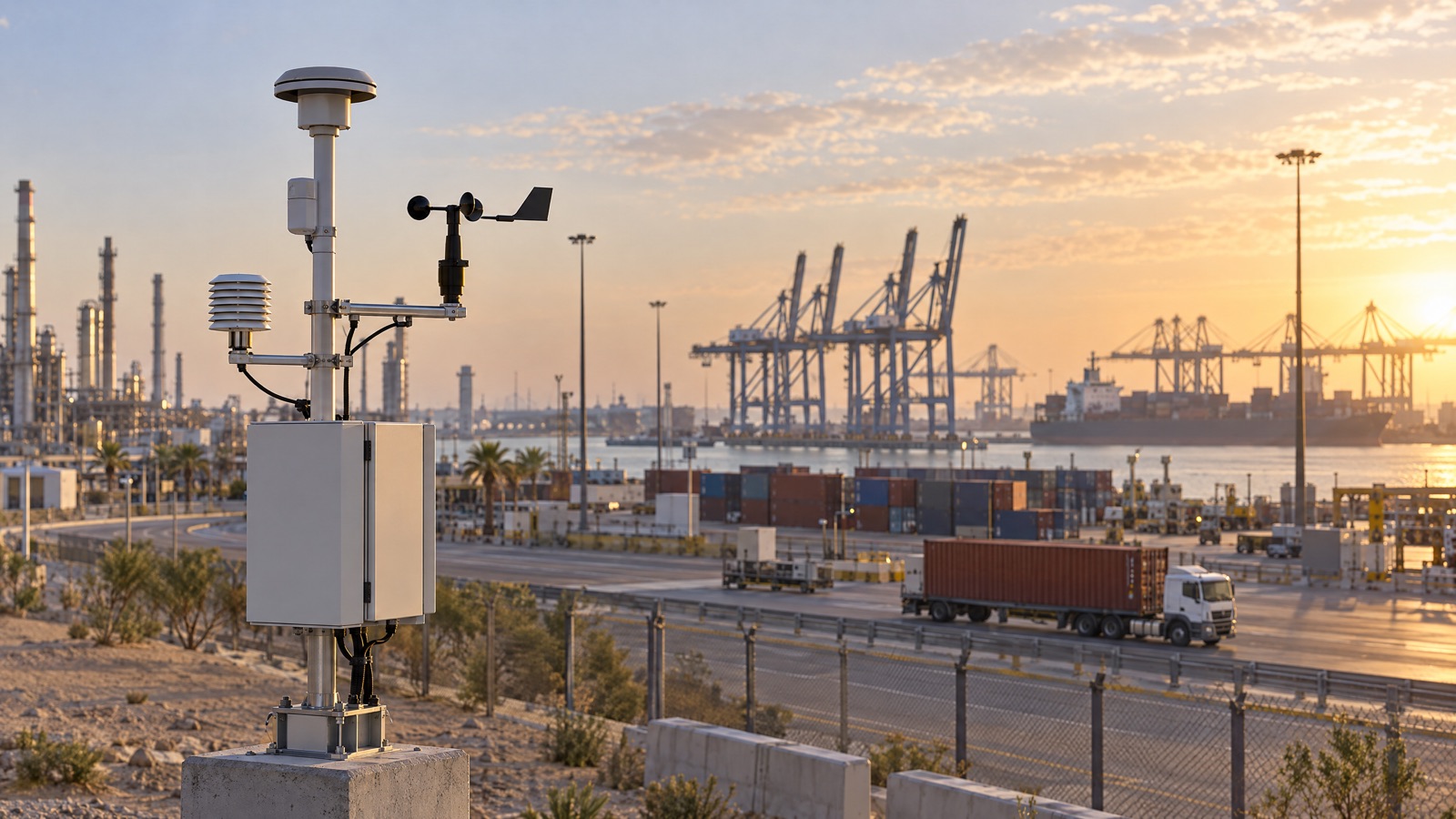
EnviroSaudi supplies port and logistics air monitoring in Saudi Arabia, configuring connected equipment for ports, inland logistics hubs, freight yards, warehouses and multi-operator industrial zones. These environments combine bulk handling, trucks, cargo equipment, storage, tenant operations and nearby receptors, so a useful network must separate station purpose, equipment class and response responsibility.
You receive a written proposal setting out the equipment configuration, scope, lead time and price. Request a quotation
EnviroSaudi helps define parameters, select fixed and portable instruments, integrate weather data, plan communications and organise live dashboards. The scope is air-monitoring equipment and operational data; equipment supply does not replace a coastal assessment, marine study, source-apportionment exercise or other study that applies to your project. Share the site plan, operating areas, cargo or material types, boundary concerns and data needs through EnviroSaudi for a scoped proposal.
Map activities before choosing stations
Port and logistics air is shaped by activity and time. Dry-bulk transfer can create particulate peaks. Truck queues, locomotives, cargo-handling equipment and support vehicles can coincide with combustion-related indicators. Warehousing or industrial tenants may introduce different gas-monitoring needs. The official US EPA Ports Primer identifies vessels, cargo-handling equipment, locomotives, trucks, vehicles, storage and warehousing among typical port-related activities. It provides general sector context, not a Saudi regulatory method.
EnviroSaudi prepares an activity-to-measurement matrix. Each row records the operational question, target parameter, expected range, station type, sampling interval, weather context and person responsible for reviewing an alert. A dry-bulk berth, gate corridor, warehouse district and shared zone boundary do not automatically receive identical equipment.
Port and logistics air monitoring in Saudi Arabia: dust, gas and weather measurements
A network may include:
- dedicated PM monitors around bulk-material areas;
- multiparameter stations at selected boundaries;
- compact nodes across a large site;
- portable instruments for route checks;
- a weather station for wind context.
Parameters include PM1, PM2.5, PM10 or total suspended particulate and selected gases where the measurement technology fits the expected concentration and environment.
The official Aeroqual Dust Sentry page describes a scattered-light particulate monitor with selectable PM fractions, a heated inlet and environmental-sensor options. For multiparameter coverage, the Aeroqual AQS 1 is a pumped modular station that measures particulate matter plus up to four selected gases simultaneously. A compact platform such as Scentroid CTair offers configurable sensor technologies, storage and communications. We supply these as examples that require application, range, interference and climate review before they are proposed.
Design a network for multiple operators
In a shared industrial zone, the network owner, tenant, terminal operator and contractor may have different responsibilities. The design states who hosts each station, provides power and communications, approves access, receives alarms, checks nearby activities, performs maintenance and authorises data release. A station reading alone may not identify which operator or source caused the change.
Weather data helps teams see whether a concentration change coincides with wind from an activity area. Time-aligned vessel, truck, loading or production logs add operational context if the asset owners make them available. These correlations guide inspection and follow-up; they do not constitute formal source apportionment. The meteorological air-quality integration service defines the monitor-side weather and timestamp requirements.
Communications, dashboards and field reliability
EnviroSaudi is available for projects across Saudi Arabia, including Jeddah logistics and port districts, Dammam and Eastern Province freight corridors, and the industrial zones of Jubail and Yanbu. These combine coastal humidity, salt exposure, heat, dust, secure access and large distances. Equipment selection considers enclosure and inlet protection, mounting, local storage during a communications outage, network coverage, cleaning access and safe maintenance routes.
The data layer presents current and rolling values, wind, device status, missing-data flags and event notes. Requirements define naming, units, averaging, time synchronisation, user roles, alarm routing, exports, retention and cybersecurity boundaries. EnviroSaudi configures the agreed monitor-side data path; the customer or appointed technology integrator controls enterprise-network access and third-party-platform changes.
A clear delivery and handover package
Deliverables include:
- the monitoring basis, station class and location schedule;
- product datasheets and bill of materials;
- mounting and utility requirements, communications map and interface register;
- installation inspections and functional checks;
- dashboard acceptance cases, training topics and maintenance plan.
Equipment supply and configuration is coordinated with installation and commissioning support. Configuration, availability and lead time are confirmed in each quotation.
To start, provide the operating-area map, cargo and material activities, truck and equipment routes, tenant boundaries, sensitive directions, target parameters, expected ranges, weather data, utilities, communications, dashboard users and applicable specification. EnviroSaudi states the proposed equipment, responsibilities, assumptions and exclusions. Environmental impact assessment, coastal or marine work and regulated source studies are commissioned separately.
Frequently asked questions
Who provides port and logistics air monitoring in Saudi Arabia?
EnviroSaudi defines monitoring duties, selects equipment, plans station locations, coordinates configured supply and installation, connects operational data, supports functional checks and prepares training, maintenance and spare-parts requirements.
How do I choose air monitoring for port and logistics activities?
Start with the activities to monitor: bulk handling, loading and unloading, truck gates, freight yards, cargo-equipment routes, warehouse districts and tenant boundaries. Each station needs a documented operational purpose.
What equipment can measure dust and combustion indicators?
The system combines dedicated optical particulate monitors, configurable multiparameter stations, compact sensor nodes, portable instruments and weather sensors. The selected technologies and ranges must suit the pollutant, concentration and site conditions.
Can one network serve several industrial-zone tenants?
Yes, if station ownership, access, data rights, alert recipients, maintenance and follow-up responsibilities are agreed. Shared readings are not assigned to a particular tenant without supporting evidence and an appropriate investigation.
Can the system connect to an existing zone dashboard?
Yes, where device and platform interfaces are compatible and approved. The scope defines data fields, units, timing, status flags, local buffering, cybersecurity responsibilities, acceptance tests and ownership of third-party changes.
What affects the cost of port and logistics air monitoring?
Cost depends on the number and type of stations, parameters, weather sensors, communications, dashboard integration, installation scope and site location.
How long does port and logistics air monitoring delivery take?
Timing depends on the selected equipment, supplier lead time, site access and the installation scope. Lead time is confirmed in your quotation.
EnviroSaudi serves projects across Saudi Arabia, including Dammam, Al Khobar, Jubail, Riyadh, Jeddah, NEOM and Qiddiya.
Request a quotation
Send us your site plan and operating areas and we will set out the scope, lead time and price for port and logistics air monitoring in Saudi Arabia in a written proposal. Request a quotation