
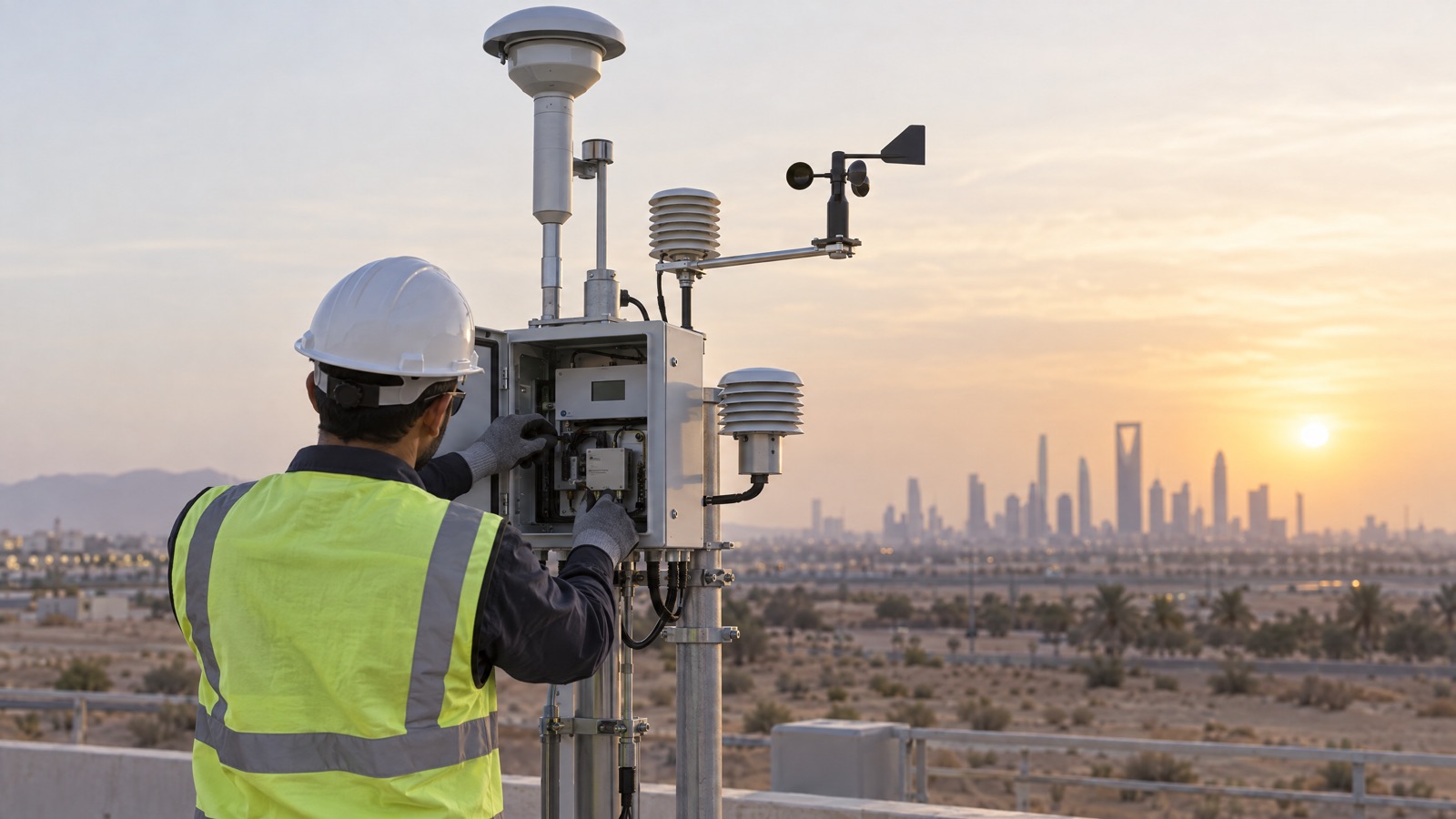
EnviroSaudi coordinates air monitoring installation, equipment startup and handover in Saudi Arabia for industrial, construction, infrastructure, municipal and building projects. We translate the approved equipment schedule into readiness checks, mounting and utility requirements, installation records, device configuration, communications tests and operator handover. Qualified civil, electrical, controls and specialist partners are assigned where their work is required.
You receive a written proposal setting out the scope, responsibilities, lead time and price. Send the approved submittal, site drawings, station schedule, utilities, network requirements, access rules and programme to EnviroSaudi at / for an installation and commissioning coordination scope, or Request a quotation.
Confirm site readiness before equipment arrives
Installation starts with the approved location and equipment configuration. EnviroSaudi reviews mounting surfaces or poles, foundation and enclosure needs, inlet clearance, weather exposure, safe access, mains or remote power, grounding and surge provisions, cable routes, cellular coverage or network ports, antenna position and protection from obstruction or damage.
The readiness schedule identifies who supplies civil bases, poles, brackets, isolators, distribution boards, cables, network services, lifting equipment and site permits. Electrical connection, civil construction and hazardous-area work are carried out by authorised contractors, and permits are issued by the relevant authority. EnviroSaudi coordinates the monitor-side requirements.
Air monitoring installation: install the selected configuration correctly
Manufacturer requirements are checked for the exact model. The Scentroid CTair page lists wall or pole mounting, 100–240 V power with an optional solar route, and Wi-Fi, cellular, LoRa and Modbus TCP/IP communications. The Scentroid CTmini page lists wall, pole or tripod mounting, DC or adapted AC power, and Wi-Fi with optional cellular communication. These details show why the approved submittal, ordered options and current manufacturer instructions are used at site rather than a generic installation checklist.
Installation records can capture:
- station ID, coordinates, mounting and inlet height, orientation;
- serial number, sensor and range configuration;
- power source and communications identifiers;
- photographs, cable and accessory checks and outstanding work.
For networks, the approved network design and instrument-siting plan remains the location reference.
Startup and commissioning checks
Commissioning verifies that the supplied equipment has been installed and configured as intended. The checklist can cover visual inspection, power-up, device date and time, firmware and configuration record, sensor identification, pump or flow status where applicable, inlet and tubing checks, local display, zero or span activity where the manufacturer procedure requires it, data logging, communications, dashboard mapping, alarms, exports and recovery after a controlled restart.
The US EPA’s Air Sensor Toolbox emphasises performance evaluation, operation, collocation and data interpretation for air sensors. Where the project specifies a collocation, the EPA collocation guide describes operating a reference and non-reference monitor together under real-world conditions for a defined period. EnviroSaudi coordinates the equipment and data checks identified in the project plan. Equipment commissioning does not replace the permit, authority acceptance or regulatory decision that applies to your project.
Data path, punch list and handover
For each station, data-path testing follows the signal from the device through the communications link to the approved destination. Checks can confirm tag or station name, parameter, unit, timestamp, interval, status flag, expected dashboard view, export and alarm routing. Modification of a plant DCS, corporate firewall or third-party platform remains with the responsible owner or controls team unless separately assigned.
Punch-list items are recorded with the responsible party and closeout evidence. Handover can include:
- installed-equipment and serial records, marked-up location drawings;
- configuration backups and communications details;
- startup checklists and open items;
- manuals, calibration and maintenance requirements;
- spares and consumables schedule, manufacturer warranty documents;
- operator training topics.
The next lifecycle step is calibration, maintenance and spare-parts planning.
Saudi site coordination
Installation coordination is available for projects across Saudi Arabia, including Jubail, Yanbu, Riyadh, Jeddah, Dammam and Khobar. Jubail and Yanbu industrial sites may require permit-to-work coordination, existing-system interfaces and carefully planned access. Riyadh construction networks may need relocatable stations, dust protection and remote power checks. Jeddah and coastal locations may add humidity and corrosion considerations. Dammam, Khobar and remote mining or utility sites may require communications surveys and a realistic service-access plan.
Frequently asked questions
Who coordinates air monitoring installation and commissioning in Saudi Arabia?
EnviroSaudi coordinates monitor readiness, installation requirements, device startup, communications checks, punch lists and handover for air-monitoring projects across Saudi Arabia, including industrial plants, utilities, construction and infrastructure sites, ports, mines, cement facilities, urban networks and commercial buildings. Civil, electrical and controls work is delivered by contractors assigned for each task.
What is checked before air monitoring installation begins?
Checks can cover approved location, mounting, inlet clearance, civil readiness, power, grounding, cable and network routes, cellular coverage, safe access, ordered accessories, documentation and responsibility assignments, for fixed gas and particle monitors, compact sensor stations, weather sensors, enclosures, communications and dashboards.
What happens during equipment commissioning?
We check installation condition, power-up, configuration, sensors, pump or flow, logging, communications, mapped units and timestamps, dashboard views, alarms, exports and specified zero, span or collocation activities.
Does commissioning mean regulatory acceptance?
No. Equipment commissioning verifies the agreed installation and functions; permit commissioning, authority witnessing and regulatory acceptance are separate and assigned through the applicable project route.
What affects the cost of installation and commissioning coordination?
Cost follows the number and type of stations, site readiness and access, power and communications arrangements, the checks specified and the documentation required. The quotation sets these out.
How long does installation and commissioning take?
Timing depends on the number of stations, site readiness, access and permits, power and communications availability and the commissioning checks specified. Lead time is confirmed in each quotation.
EnviroSaudi serves projects across Saudi Arabia, including Dammam, Al Khobar, Jubail, Riyadh, Jeddah, NEOM and Qiddiya.
Need air monitoring installation in Saudi Arabia? Request a quotation and EnviroSaudi will set out the scope, responsibilities and lead time for your project.