
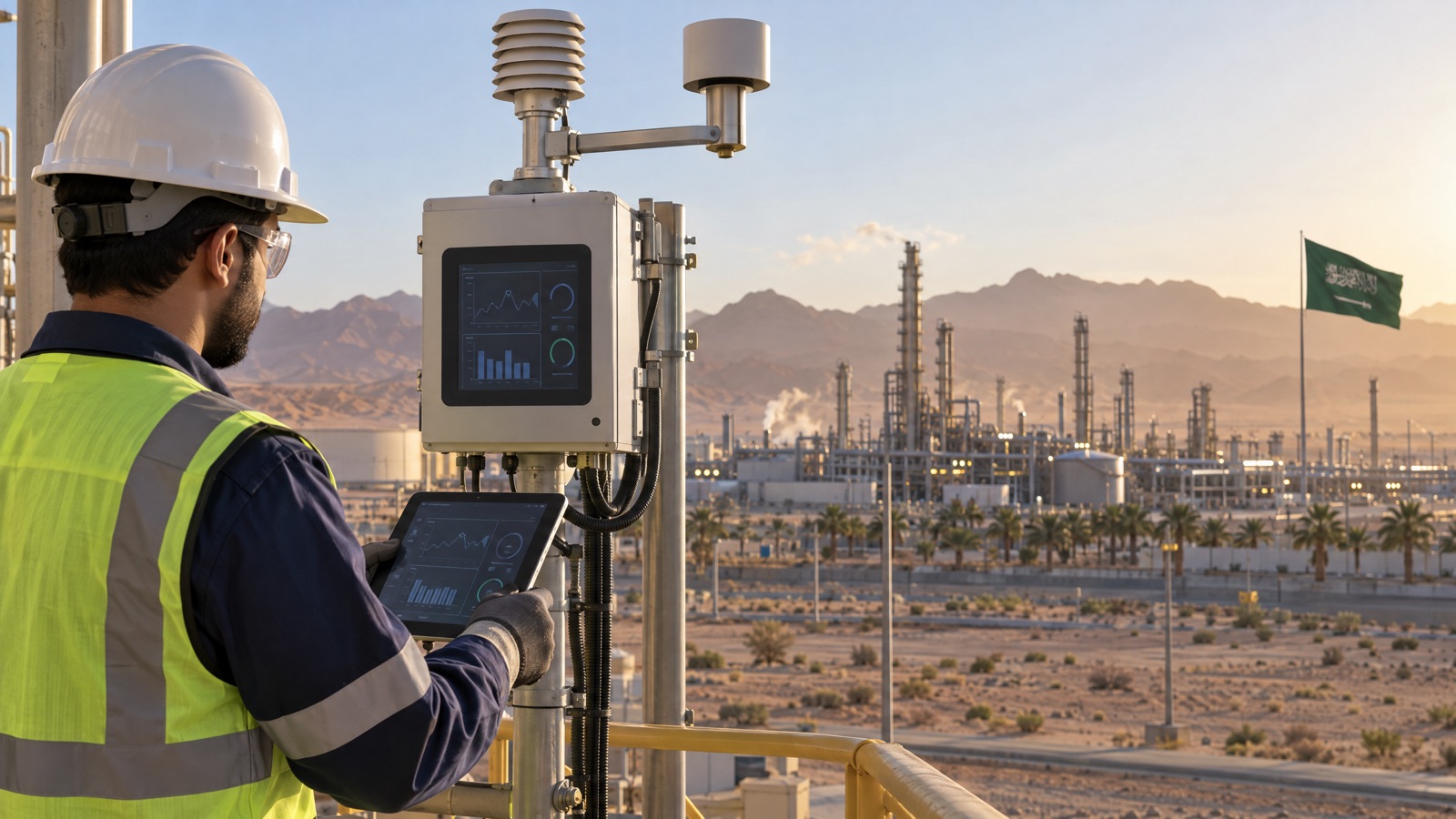
EnviroSaudi supplies Teledyne API ambient air analysers in Saudi Arabia, covering pollutant-specific ambient air measurement, station upgrades and dilution-CEMS duties. We help government, municipal, research, utility and industrial project teams define the analyser, range, sample manifold, calibration equipment, rack, shelter and data interfaces required for an operating measurement station.
You receive a written proposal setting out the configuration, scope, lead time and price. Request a quotation
Teledyne API equipment is most useful when each analyser is selected against a defined pollutant and measurement principle. It is not a single multiparameter sensor enclosure. Send the pollutant schedule, required ranges, station design, applicable specification, interfaces and project programme through EnviroSaudi for a configured technical and commercial response. Configuration, availability, lead time, product revision and options are confirmed in each quotation.
Pollutant-specific T Series analysers
The current Teledyne API products catalogue groups instruments by carbon, nitrogen, oxygen and sulfur compounds, particulate measurement, gas calibration and other applications. For a conventional ambient station, four established T Series models illustrate the pollutant-specific approach:
- T100 for sulfur dioxide;
- T200 for nitric oxide, nitrogen dioxide and total nitrogen oxides;
- T300 for carbon monoxide;
- T400 for ozone.
The final station may use different or additional models depending on the required range, direct-versus-converted measurement, trace requirements and approved method. EnviroSaudi's monitoring needs assessment and equipment selection traces every parameter to an analyser, range, calibration arrangement and output rather than relying on a generic brand list.
Measurement principles matter
Teledyne API's official T100 page states that the analyser uses UV fluorescence for low-level SO2 measurement. The T200 page describes chemiluminescence measurement of NO, NO2 and NOx for ambient or dilution-CEMS use. The T300 uses gas-filter correlation with infrared absorption for CO, while the T400 uses UV absorption for ozone.
These principles affect the required gas handling, calibration, interferences, consumables and QA checks. They also explain why model choice should begin with the method and concentration range. Analyser selection is confirmed per stack and process stream. Equipment supply does not replace the permit, approved method or regulatory decision that applies to your project.
Complete ambient air analyser stations in Saudi Arabia
A reference-style ambient station is more than its gas analysers. The design includes an external sampling manifold, particulate inlet and monitor, zero-air supply, multigas calibrator, cylinders and regulators, rack, climate-controlled shelter, meteorological instruments, data acquisition, time synchronisation and remote diagnostics. Teledyne API's product list includes gas calibrators and the T640 particulate instrument alongside its gas-analyser families.
EnviroSaudi develops the station bill of materials, rack layout, tubing and manifold concept, utilities, calibration-gas schedule, I/O register, communications map and maintenance plan. The ambient air-quality monitoring networks page covers how individual stations fit into a wider network with siting, communications and operational governance.
Dilution-CEMS and industrial applications
The T200 manufacturer page explicitly identifies ambient and dilution-CEMS use. That does not mean the T200, T100 or T300 can be placed directly into any stack system. A dilution-CEMS requires a verified probe and dilution arrangement, clean-air supply, analyser ranges, calibration sequence, supporting measurements and data handling appropriate to the approved method.
For power, utility and process facilities, EnviroSaudi evaluates Teledyne API analysers as components within the continuous emissions monitoring systems scope. Hot-wet extractive, conditioned-dry, particulate, oxygen, flow and moisture duties may require other equipment and manufacturers. The proposal will state the exact architecture rather than treating an ambient analyser family as a universal CEMS.
Integration, commissioning and lifecycle planning
Official T Series pages list front-panel operation, built-in data acquisition and RS232, Ethernet and USB communications. Integration still requires a defined point list, units, time base, analogue or digital interface, status and calibration flags, alarm logic and data destination. The customer or controls integrator retains responsibility for enterprise-network access, cybersecurity and plant-system changes.
Riyadh and inland Saudi stations may need careful shelter cooling and dust control. Jeddah and Gulf-coast installations may add humidity and corrosion considerations. Remote utility sites need realistic calibration-gas logistics, filters, pumps and spare-parts planning. EnviroSaudi is available for projects across Saudi Arabia, including Riyadh and Jeddah.
Installation and commissioning coordination covers physical readiness, analyser startup, leak and flow checks, communications and functional tests. Calibration, maintenance and spare-parts planning defines gases, schedules, consumables and service responsibilities.
Prepare a Teledyne API enquiry
Provide the pollutant list, required ranges and units, applicable method, station or dilution-CEMS duty, site conditions, existing rack and shelter, calibration equipment, power, data interfaces, certification requirements and delivery programme. EnviroSaudi will identify the model family and supporting components to evaluate and state where current manufacturer confirmation is required.
Frequently asked questions
Who supplies Teledyne API ambient air analysers in Saudi Arabia?
EnviroSaudi supplies selected Teledyne API gas analysers, particulate monitors and calibration equipment for suitable projects. The quotation confirms models, ranges, options, accessories, availability and delivery terms.
How do I choose analysers and equipment for an ambient air station?
Examples include T100 for SO2, T200 for NO/NO2/NOx, T300 for CO and T400 for ozone, with exact variants and ranges selected from your requirement and manufacturer documentation. A station may also need a sample manifold, particulate monitor, zero-air generator, multigas calibrator, cylinders, regulators, rack, shelter, weather sensors, data acquisition, communications and a maintenance plan.
Can Teledyne API analysers be used in a CEMS?
Certain models can suit a properly designed dilution-CEMS. The complete probe, dilution, calibration, analyser, supporting-measurement and data-handling architecture must match the approved method and stack conditions.
Can EnviroSaudi integrate analyser data with an existing platform?
Yes, subject to verified interfaces. The scope can define ports, signals, tags, units, timestamps, status flags and functional checks, while the customer controls network security and third-party-system changes.
Are Teledyne API analysers automatically accepted for Saudi regulatory reporting?
No. Acceptance depends on the exact model and configuration, applicable Saudi requirement, approved method, installation and authority review.
What affects the cost of a Teledyne API analyser station?
Cost depends on the analysers and ranges selected, calibration equipment, rack and shelter needs, particulate and weather instruments, data acquisition and installation and maintenance scope.
How long does it take to supply Teledyne API equipment?
Timing depends on the analyser models, options and quantities and the station scope. Availability and lead time are confirmed in each quotation.
EnviroSaudi serves projects across Saudi Arabia, including Dammam, Al Khobar, Jubail, Riyadh, Jeddah, NEOM and Qiddiya.
Planning Teledyne API ambient air analysers in Saudi Arabia? Request a quotation with your pollutants, ranges and station design.